
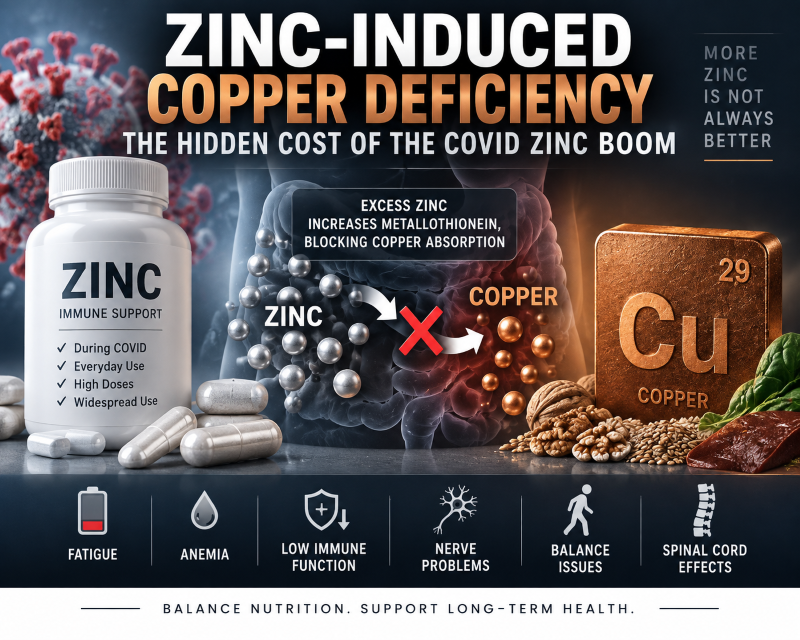
During the height of the COVID-19 pandemic, zinc became one of the most widely discussed nutritional supplements for immune support. People stocked up on zinc tablets, lozenges and combination immune formulas containing zinc, vitamin C and vitamin D. Because zinc is essential for normal immune function, the interest was understandable.
But an important part of the story received far less attention: zinc and copper compete with one another inside the body, and chronically consuming too much zinc can produce a significant copper deficiency.
This is not merely theoretical. Medical literature has documented zinc-induced copper deficiency, including reports specifically associated with the increased use of zinc during the COVID-19 era.
Zinc Is Essential—but More Is Not Always Better
Zinc is indispensable to human health. It contributes to immune function, wound healing, DNA synthesis, protein synthesis and hundreds of enzymatic processes.
The problem begins when people assume that because a nutrient is beneficial, increasingly large doses must provide increasing benefits.
The recommended dietary allowance for zinc is 11 mg per day for adult men and 8 mg for adult women, while the tolerable upper intake level for adults is 40 mg per day from all sources. The upper limit is not a target—it represents the highest average daily intake unlikely to pose a risk for most healthy people.
The National Institutes of Health specifically warns that taking 50 mg or more of zinc per day for a period of weeks can interfere with copper absorption.
During the COVID era, however, supplements containing 30, 50 or even higher amounts of zinc became common parts of people’s daily routines. Some people combined several products without realizing that their total zinc intake was accumulating.
A person might take a multivitamin containing zinc, an immune formula containing zinc and additional zinc lozenges during cold and flu season. Individually, each product may appear reasonable. Together, they can create a very different nutritional picture.
How Excess Zinc Blocks Copper
The zinc-copper interaction is particularly important because the two minerals do not operate independently.
When large quantities of zinc enter intestinal cells, the body increases production of a protein called metallothionein. Metallothionein binds metals inside intestinal cells.
Although increased metallothionein production is stimulated by zinc, the protein has a particularly strong affinity for copper. Copper therefore becomes trapped inside intestinal cells instead of entering the bloodstream.
When those intestinal cells are naturally shed, the trapped copper leaves the body with them.
The result is a nutritional paradox:
The person may be consuming adequate copper but gradually become copper deficient because excessive zinc is preventing that copper from being effectively absorbed.
This mechanism is well established and is one reason excessive zinc intake is recognized as a risk factor for acquired copper deficiency.
COVID-19 Created the Perfect Environment for Zinc Overuse
Early in the pandemic, scientists became interested in zinc because of its established importance to immune function and its potential antiviral properties. Studies also found associations between low zinc status and worse outcomes among some hospitalized COVID-19 patients.
However, an association between zinc deficiency and illness does not mean that taking progressively larger doses of zinc provides progressively greater protection.
Nevertheless, supplements were widely discussed online and in the media, and some COVID-related reports used remarkably high quantities. For example, the NIH summarizes a small case report in which four COVID-19 patients received approximately 115–184 mg of zinc per day for 10–14 days. Such reports did not establish that these doses should be used routinely.
Researchers eventually began drawing attention to another consequence of the zinc boom: copper deficiency.
A 2022 medical report titled The COVID-19 Pandemic and Zinc-Induced Copper Deficiency: An Important Link described a patient who took zinc in an attempt to prevent COVID-19 and subsequently developed severe copper deficiency with serious complications. The authors specifically warned clinicians about excessive zinc supplementation during the pandemic.
This does not establish that copper deficiency became widespread across the entire population because of COVID-era zinc use. Population-level evidence demonstrating such an increase is limited. What it does establish is that the biological mechanism is real, high-dose zinc use increased concern about the problem, and clinically significant cases occurred.
Symptoms of Copper Deficiency Can Be Surprisingly Extensive
Copper is required for much more than most people realize.
It participates in iron metabolism, red and white blood-cell production, connective-tissue formation, nervous-system function and numerous enzymes involved in cellular metabolism.
Consequently, copper deficiency can produce symptoms affecting several apparently unrelated systems.
Possible manifestations include:
- Fatigue and weakness
- Anemia
- Low white blood-cell counts, particularly neutropenia
- Numbness or tingling in the hands or feet
- Difficulty walking
- Poor balance and coordination
- Sensory disturbances
- Muscle weakness
- Neuropathy
- Spinal-cord dysfunction (myelopathy)
Copper deficiency can sometimes resemble vitamin B12 deficiency because both conditions can produce anemia and neurological abnormalities.
That similarity can make copper deficiency surprisingly easy to overlook.
The Neurological Consequences Deserve Special Attention
One of the most serious consequences of prolonged copper deficiency is copper-deficiency myelopathy, a disorder involving the spinal cord.
Patients can develop sensory abnormalities, difficulty walking, loss of coordination, weakness and other neurological symptoms. The condition can closely resemble the spinal-cord degeneration associated with severe vitamin B12 deficiency.
A 2024 systematic review examined 198 reported cases of copper-deficiency myelopathy. Among the major recognized causes were previous gastric surgery, malabsorption and excessive zinc exposure. Importantly, neurological recovery was often incomplete even after copper deficiency was treated, emphasizing the importance of recognizing the problem early.
This is one reason unexplained neurological symptoms should not automatically be attributed to aging, spinal problems or B12 deficiency without considering other possibilities.
Copper Deficiency Can Also Look Like an Iron Problem
Copper and iron metabolism are closely interconnected.
Someone can therefore develop anemia from copper deficiency even though the underlying problem is not simply inadequate iron intake.
Copper deficiency is well documented as a cause of anemia and neutropenia, and the anemia can be microcytic, normocytic or macrocytic. In other words, there isn’t one blood-count pattern that always identifies it.
Severe cases can even resemble bone-marrow disorders.
A 2026 systematic review of zinc-induced hematologic toxicity found that excessive zinc exposure was associated with copper deficiency and commonly produced anemia together with neutropenia or leukopenia. Some patients were initially suspected of having myelodysplastic syndrome because their laboratory and bone-marrow findings could resemble a serious hematologic disease.
The Problem Is Nutrient Balance
The lesson from the zinc-copper relationship is not that zinc is harmful.
Zinc is essential.
Copper is essential.
The problem is imbalance.
Nutrition does not operate according to the principle that if a little is good, a lot must be better. Minerals interact with one another. Increasing one nutrient dramatically can alter the absorption or metabolism of another.
The zinc-copper relationship is one of the clearest examples.
For most adults, the NIH lists a zinc upper intake level of 40 mg per day, while warning that doses of 50 mg or more for weeks can interfere with copper absorption. Therapeutic doses prescribed and monitored by a clinician are a different situation.
People taking several supplements should therefore look at their total daily zinc exposure, rather than examining each product separately.
When Copper Testing May Be Worth Discussing With a Doctor
Someone who has been consuming high-dose zinc for an extended period and develops unexplained anemia, low white blood cells, numbness, tingling, balance problems or walking difficulties should tell their healthcare provider about their supplement use.
Doctors may consider tests such as serum copper and ceruloplasmin, along with zinc levels, a complete blood count and other tests depending on the symptoms. Copper deficiency should not be self-diagnosed from symptoms alone because many of its manifestations overlap with other conditions.
Likewise, simply adding large quantities of copper while continuing excessive zinc intake is not necessarily the answer. The source of the imbalance needs to be identified.
The Larger Lesson From the COVID Supplement Boom
The COVID-19 pandemic produced unprecedented interest in vitamins, minerals and herbal supplements. Some of that interest encouraged people to pay closer attention to nutrition, which can be beneficial.
But the zinc experience illustrates an important principle that should not be forgotten:
Nutrients work as a system.
Correcting a genuine deficiency can improve health. Continually increasing a nutrient beyond physiological requirements can produce an entirely different outcome.
In the case of zinc, chronic excessive intake can gradually suppress copper absorption until symptoms appear months later. By that point, a person may never connect fatigue, anemia, numbness, weakness or balance problems with the immune supplements they began taking years earlier.
The lesson is not to fear zinc.
It is to respect nutritional balance.
Zinc supports the immune system—but zinc should never be viewed in isolation from copper.
